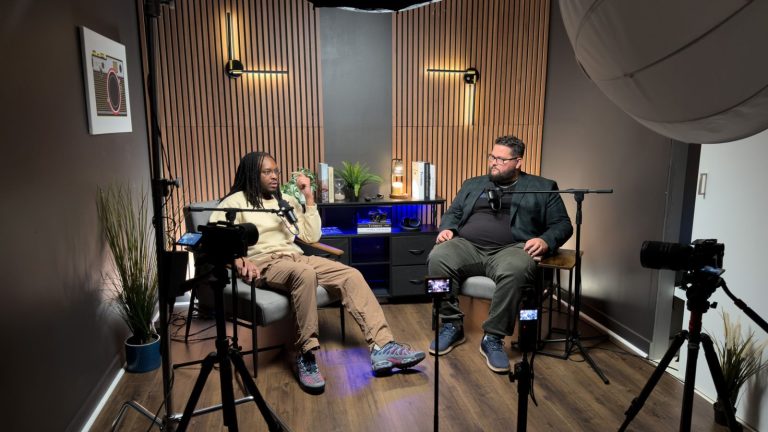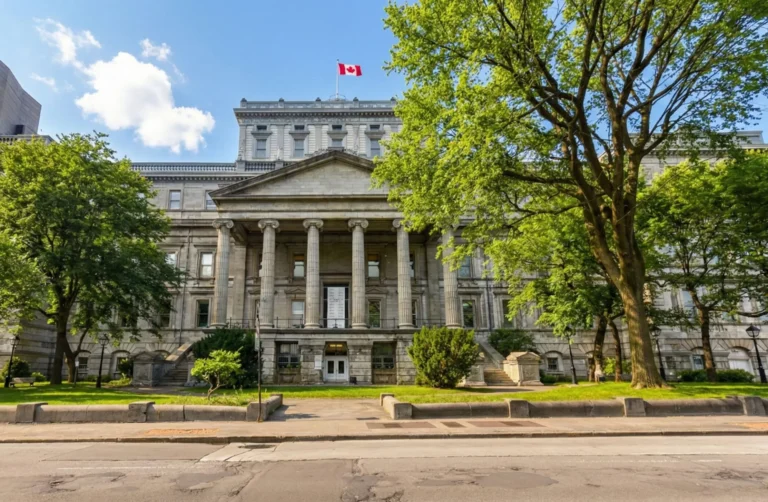

Three clients, three realities: a law firm, a painter and a fashion boutique. Here’s what the new ChatGPT listing changes for them, and what their Google Business Profile already brings in.
Since November 10, 2026, a business can claim its listing in ChatGPT, correct its information and see how often the assistant mentions it. That’s good news. But for a local SME in Québec, the ChatGPT listing isn’t open to everyone yet, and the Google Business Profile is still, by far, the one that makes the phone ring. Don’t choose between the two. Prepare for the new one by taking care of the old one.
On Tuesday, November 10, 2026, OpenAI launched in beta what it calls Businesses in ChatGPT. I already know the question our clients will ask me this week: “Do we need to do something?”
Yes. But don’t panic.
Because we know the idea. A verified business listing, with a blue checkmark, information you control and statistics on how people find you. It’s called a Google Business Profile. And it has existed since 2005.
What’s changing is where your customers ask the question. More and more, they no longer type “impaired driving lawyer Longueuil” into Google. They ask ChatGPT who to call. Here’s what OpenAI actually launched, how it compares with what Google already offers, and what we see in our own clients’ numbers.
What OpenAI launched, in plain terms
Everything goes through a new space, the Business Hub, available in the ChatGPT sidebar or at chatgpt.com/business-hub. According to TechCrunch and the first people to test it, here’s what you can do there.
- Claim your listing. You search for your business and prove you have the right to manage it: through the business phone number or email, through a DNS record on your domain name, or through Shopify for online stores. Then comes an identity check, with ID and business registration information.
- Get the blue checkmark once verification is approved.
- Control your information: website, description, logo, shipping and return policies. Merchants can also connect a product feed with prices and availability.
- See statistics over 28 days: mentions in answers, listing views, clicks to the website and the main conversation topics where the business appears.
- Create a business agent, a kind of virtual salesperson that answers questions about your products, directly in ChatGPT. For now, it’s reserved for eligible e-commerce and online service businesses in the United States.
The Québec catch. For now, a local business, a store, a restaurant, a law office with a storefront, can only claim an existing listing in the United States. A business that sells online can sometimes add itself. OpenAI names no country and no date. In other words, for most SMEs on the South Shore, the door is ajar, not open.
Three details you won’t see in the headlines.
- A published listing can’t be removed. OpenAI support can neither delete nor hide a published listing. We check everything before submitting.
- Each brand and each address is a separate claim. Claiming the main brand doesn’t claim its branches.
- Claiming doesn’t move you up in the answers. OpenAI says so itself: it guarantees neither better positioning nor sales. ChatGPT keeps drawing on other sources to talk about you.
Remember that last point. We’ll come back to it.
Google has been doing this since 2005
The Google listing started out as Local Business Center, in 2005. Twenty years later, it has become the number one reflex for any business: claim your listing, add your hours, reply to your reviews. TechCrunch summed it up in a headline on November 10: with these listings, ChatGPT looks a little more like Google. Fine. Let’s put them side by side.
| Criterion | Google Business ProfileSince 2005 | ChatGPT listingBeta, November 2026 |
|---|---|---|
| Available in Québec | Yes | Not yet, except some online businesses |
| Customer reviews | Yes, with your replies | No |
| Call button and directions | Yes | No |
| Statistics | Views, searches, calls, directions | Mentions, views and clicks, over 28 days |
| Verification | Video, phone or email | Phone, email, DNS or Shopify, then ID |
| Cost | Free | Free during the beta |
What jumps out isn’t what ChatGPT adds. It’s what it doesn’t have yet: reviews, the call button, directions. In other words, everything that turns a search into a customer walking through the door.
And there’s a detail few people know: ChatGPT already reads your Google Business Profile. When you ask it for the address of one of our clients, it cites the client’s website… and google.com as a source. So your Google Business Profile isn’t the old technology being replaced. It’s one of the sources where AI goes to find the truth about you.
Riendeau Avocats: what the Google Business Profile really brings in
Riendeau Avocats is a criminal law firm we’ve been working with since 2018. It grew from 5 to 35 lawyers during that time. We handle its websites, its advertising and its visibility in AI tools. In short, if one client could tell us whether the Google Business Profile is outdated, it’s this one.
Here’s what the Google Business Profile for the Montréal office shows, from May to mid-October 2026:
- 9,833 profile views, more than half of them on Google mobile search;
- 374 calls directly from the profile;
- 474 direction requests;
- 669 clicks to the website.
In the firm’s call tracking system, over the last twelve months, the Google Business Profile is the second-largest source of calls, just behind Google Ads. More than 1,100 calls. For a free listing, that’s not nothing.
Now, the nuance nobody will tell you. Calls from the profile are short: a little over a minute on average, compared with almost three minutes for calls from advertising. And few of them turn into new cases. Why? Because the profile is also used by existing clients looking for the phone number, the address or the closing time. The proof: the search that shows the profile most often is the firm’s own name. The Google Business Profile is both a storefront and a customer service desk. Both matter.
The gap we found in our last audit. When you ask ChatGPT where Riendeau Avocats is located, it answers correctly: two offices, one in Montréal and one in Saint-Lambert, on Victoria Avenue. It knows this thanks to the website. But on Google, there’s only one profile, the Montréal one. The South Shore office doesn’t have one. Result: the AI knows the firm better than Google Maps does. And as we’ll see below, this small gap costs more than it seems.
And on the AI side? The firm is already getting requests from people who found it by asking ChatGPT, and we see them come through in the call tracking. The ChatGPT listing, when the firm can claim it, will add to that work. Not replace it.
Peinture Pro Static: several brands, several listings
Another reality, another client. The group behind Peinture Pro Static doesn’t sell just one service. It has a brand for exterior painting, one for kitchen cabinets, one for countertops and one for caulking. Each has its own website, phone number and advertising, on the South Shore, in Montréal and on the North Shore.
It’s a smart choice for Google: someone searching for “paint kitchen cabinets” doesn’t want to land on a caulking page. But it multiplies the work. One listing per brand, identical information everywhere, reviews to collect for each one.
And the ChatGPT listing follows exactly the same logic: each brand and each address is claimed separately, and there’s no central management for a group yet. A business that neglected its Google listings by brand will live the same headache in ChatGPT, twice over.
On Google, the main brand has a single profile, in Boucherville: 41 reviews and a perfect 5 out of 5 rating. It’s a valuable asset, built review by review over years. But at least four websites revolve around that profile: residential, commercial, kitchen cabinets and a quote page. And while taking inventory of our accounts for this article, we found a second profile for the same address, which Google had flagged as a duplicate.
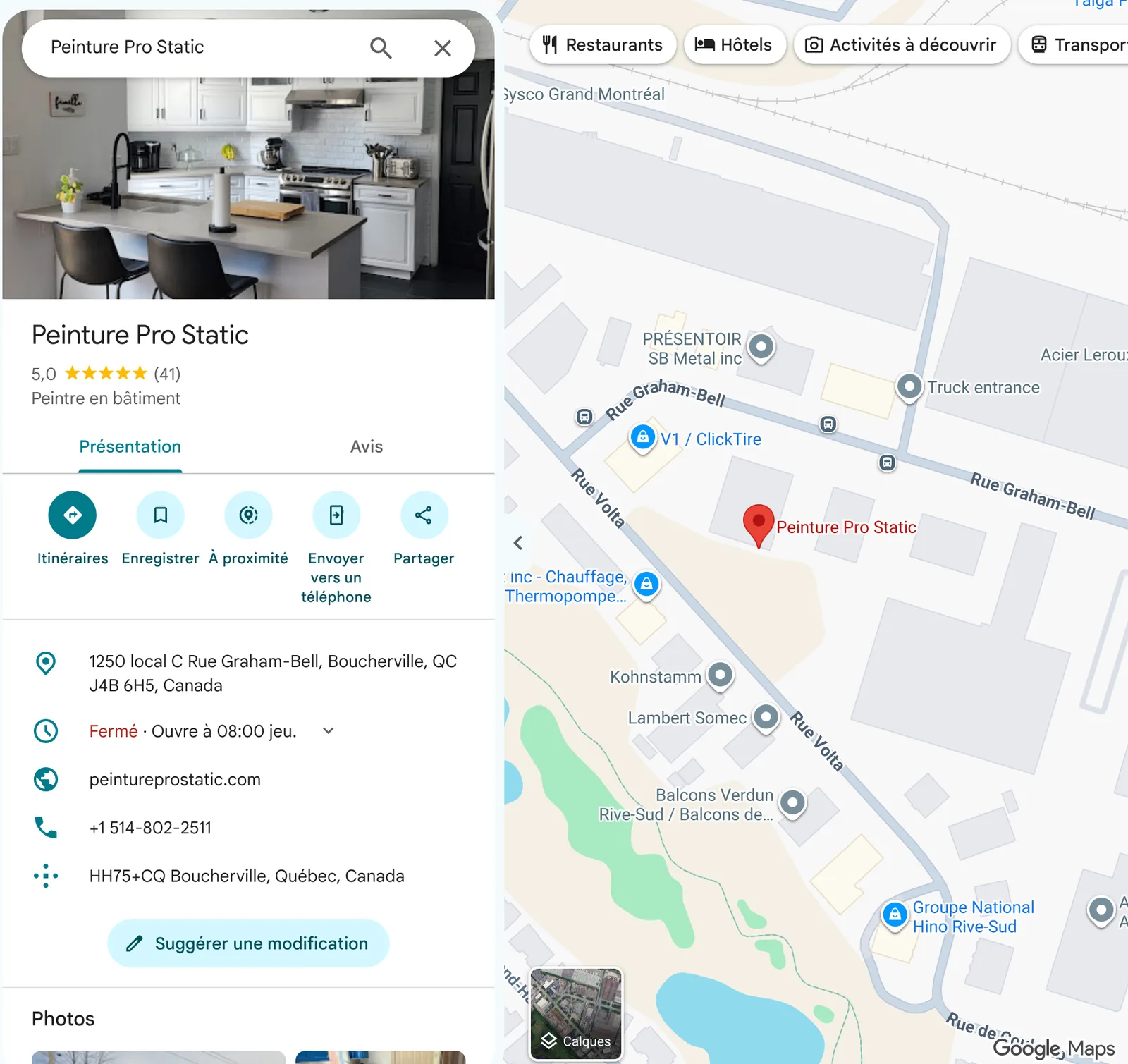
A duplicate doesn’t look like much. But it’s exactly the kind of detail that confuses Google… and that will confuse ChatGPT the day you need to claim the right listing, with the right reviews, at the right address.
The lesson is simple: before thinking about ChatGPT, take inventory. How many brands? How many addresses? How many Google listings really exist, and who has access to them?
Boutique Vvög: two stores, but mostly an online store
Third reality. Boutique Vvög sells fashion for men and women, with two stores: one in Chambly, one in Granby. We’ve been working with them since 2021. And most of their sales don’t happen in store. They happen online.
So what are their two Google Business Profiles for? For something that’s often underestimated: trust. Someone in Rimouski who hesitates to order a coat from a site they don’t know will search for the store’s name. They land on a Google Business Profile with a real address, photos of the store and reviews from real customers. They think: “OK, this isn’t a ghost store.” And they order.
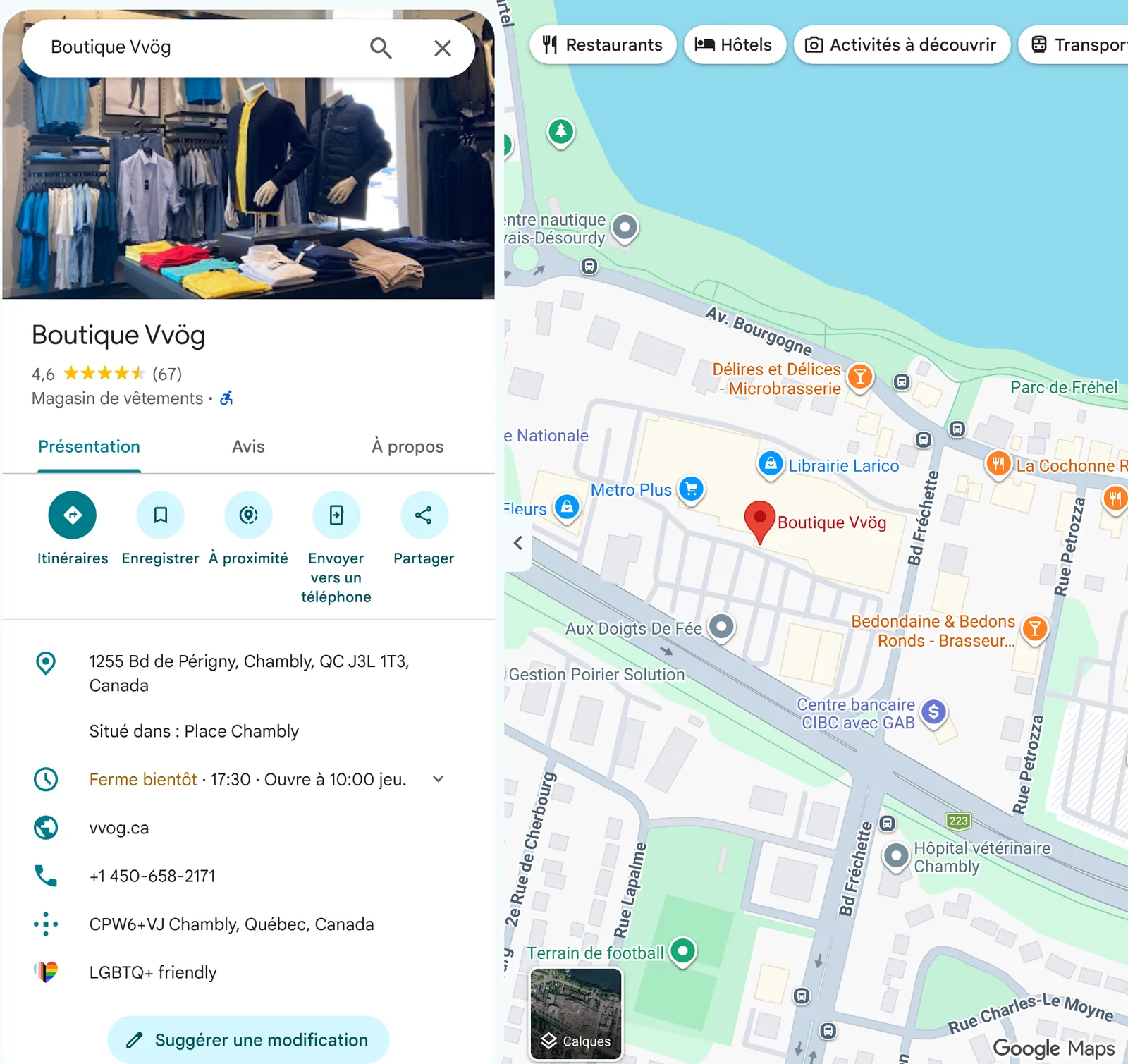
And for someone twenty minutes away, the same profile does the opposite: it gives them directions, the hours and a good reason to come try things on in person. One listing, two customers. The one who orders and the one who drives over.
For ChatGPT, Vvög is exactly the kind of business targeted first. Claiming starts with businesses that have a website, and online stores are the best served. Shopify merchants can connect their store to speed up verification. Better still: according to OpenAI, eligible products from Shopify merchants are already integrated into ChatGPT through Shopify’s catalogue. In other words, some of Vvög’s clothing may already appear in ChatGPT when someone looks for a winter coat, long before Riendeau can claim its local listing.
The trap to avoid. A product feed means prices and availability. If ChatGPT shows a price that’s no longer right or an item that’s out of stock, the trust built with the Google Business Profile goes out the window. The catalogue has to be as clean as the storefront. And, once again, each listing is managed separately: the online store, the Chambly store and the Granby store.
In Québec, the battle will be fought locally
OpenAI presents this launch as a first step, and everything suggests local listings will arrive here soon. The day it opens, it won’t be the big brands that benefit most. It will be the neighbourhood shops, contractors and professional offices that already have their listings in order.
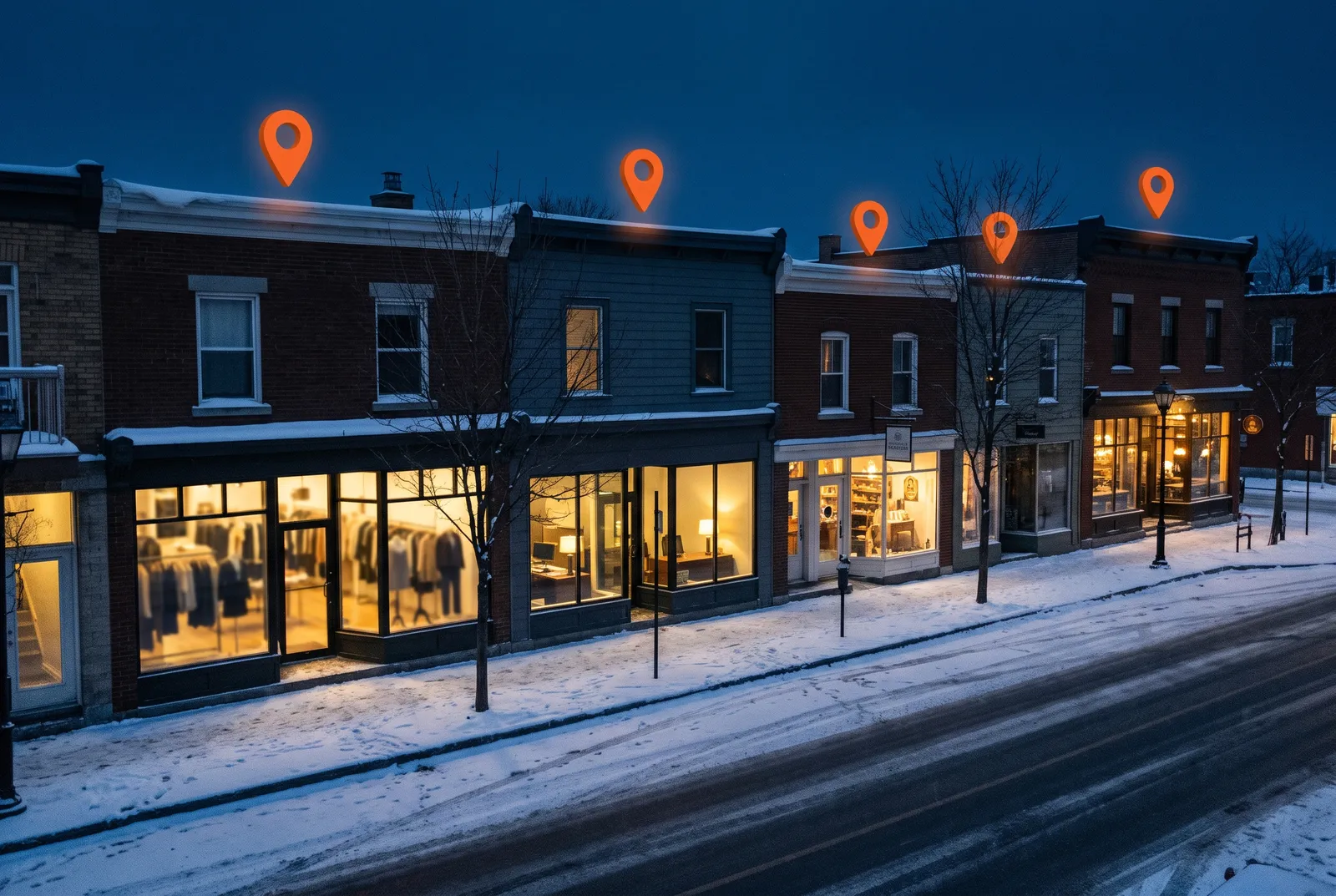
Why am I so sure? Because ChatGPT already thinks locally.
The proof is in how OpenAI counts. For a local business, the Business Hub counts a mention every time ChatGPT shows a result for its address. Not for its brand. For its address. The tool is built around location.
You can also see it in the answers. For our clients as for our own agency in Saint-Lambert, ChatGPT’s answers change depending on where you ask the question from. Ask for a marketing agency from the South Shore, then from downtown Montréal: you won’t get the same list. Location has become a criterion, just like on Google.
And the most telling test, we ran it for Riendeau Avocats. We asked four AI tools the same question: “Which criminal lawyer should I see in Longueuil or Saint-Lambert?” ChatGPT, Gemini and Google’s AI Mode answered with, at the top of the list, the same firms as the Google map for “criminal lawyer Longueuil.” Riendeau Avocats? First in Google’s classic results for that search… but missing from the map, and missing from the AI answers. The reason is simple: its Saint-Lambert office doesn’t have a Google Business Profile.
Read that again. The best-ranked firm on Google for Longueuil disappears from AI answers because it’s missing a local listing. It’s not a question of content or budget. It’s a question of address.
What this means for you:
- a Google Business Profile for every address where you receive customers, not just for head office;
- the same name, the same address and the same phone number everywhere: website, Google Business Profile, directories, social media;
- a page on your website for each city you really serve, with the address of the nearest office;
- recent reviews, for each address.
When the ChatGPT listing opens in Québec, the AI will already have its opinion on who the best choice is in Longueuil, Chambly or Terrebonne. It will have built that opinion with what it finds today.
What we’re doing for our clients this week
No need to wait for the door to open in Québec to get ready. Here’s the order we follow.
- We record what ChatGPT says about you today. About twenty questions your customers really ask, with dated answers. Once your listing is claimed, what ChatGPT knows about you will change. Without the “before” picture, we’ll never be able to measure the effect.
- We clean up the Google Business Profile. Same name, same address, same phone number as on the website, everywhere. The right categories, the real hours, recent photos. One profile per address. It’s the foundation of local SEO on Google, and ChatGPT clearly uses it too.
- We take care of reviews. It’s the one thing the ChatGPT listing doesn’t have, and it’s often what makes the difference between two businesses side by side on the map.
- We decide who claims. The ChatGPT listing must be claimed by the business itself, with its owner’s ID. Then the administrator can add the agency as a team member. We never claim a listing on a client’s behalf.
- We claim as soon as possible, but we validate everything first. A published listing can’t be removed. We review every piece of information with the client before pressing the button.
- We keep our own numbers. OpenAI’s statistics cover 28 days and ChatGPT only. We copy them every month and keep them alongside Search Console, the Google Business Profile and call tracking.
That’s exactly the GEO, or AI search optimization, work we already do for our clients. The ChatGPT listing is a new tool in the toolbox. The toolbox itself stays the same: a clear website, an impeccable Google Business Profile and identical information everywhere AI tools go looking.
Frequently asked questions
What is Businesses in ChatGPT?
A feature launched in beta by OpenAI on November 10, 2026. Through the Business Hub, a business claims its listing in ChatGPT, gets it verified, corrects its information and views statistics on its mentions and clicks to its website.
Can my business in Québec claim its ChatGPT listing?
Not yet if it’s a local business: for now, local businesses can only claim an existing listing in the United States. A business that sells online can sometimes add itself. The best approach is to try one business at a time.
How much does the ChatGPT listing cost?
Nothing, for now. The Business Hub is free during the beta, according to what Digiday reported on launch day, but OpenAI doesn’t rule out a paid model later. The announcement also already links it to advertising in ChatGPT.
Will claiming my listing make me appear more often in ChatGPT?
No. OpenAI states that claiming guarantees neither better positioning nor sales. ChatGPT keeps relying on your website, your Google Business Profile and what others say about you.
Do I still need a Google Business Profile?
Yes, more than ever. It generates calls and visits today, it carries your reviews, and ChatGPT already uses it as a source to talk about you.
In short
OpenAI just invented something that has existed since 2005. That’s not a criticism: it’s a confirmation. Businesses that took their Google Business Profile seriously ten years ago are ahead today, and they’ll be ahead tomorrow in ChatGPT.
So this week, forget the blue checkmark. Open your Google Business Profile. Check your address, your hours, your phone number, your photos. Count your listings. Reply to your reviews. The day ChatGPT’s door opens in Québec, you’ll be ready in five minutes instead of five weeks.
Sources
- OpenAI rolls out new business profiles, making ChatGPT just a little bit more like Google, TechCrunch, November 10, 2026.
- ChatGPT launches Business Hub: what its visibility numbers count, and what they hide, Hans van Gent, November 10, 2026.
- Businesses in ChatGPT: Business Hub, Insights and Agents, Relevant Audience, November 11, 2026.
- Business Hub : OpenAI permet aux entreprises de revendiquer leur fiche dans ChatGPT, Abondance, November 11, 2026 (in French).
- Gamache Média data: Google Business Profiles and call tracking for the clients mentioned, consulted in October and November 2026.
Sources consulted on November 11, 2026.